
An equestrian village of historic estates, rolling acreage, and preserved rural character — straddling DuPage and Kane counties, just 33 miles west of Chicago.
Wayne is one of the most distinctive communities in the entire Chicago metro area — a small, intentional village of roughly 2,300 residents that has genuinely preserved its rural, equestrian character for generations. Straddling DuPage and Kane counties, Wayne was built around horse breeding and country estate living, and that identity still defines everyday life here. There is simply no other community like it this close to Chicago.
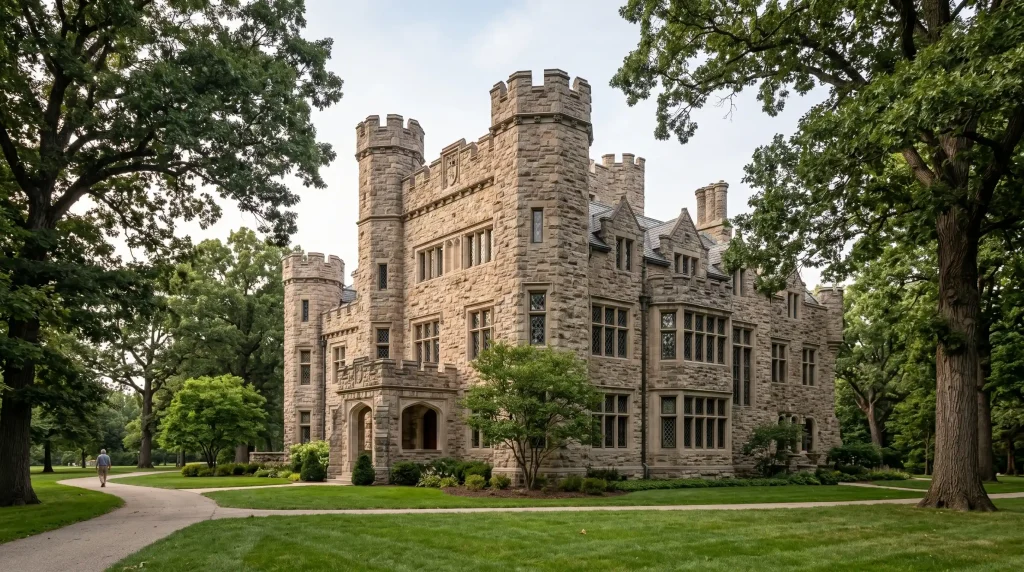
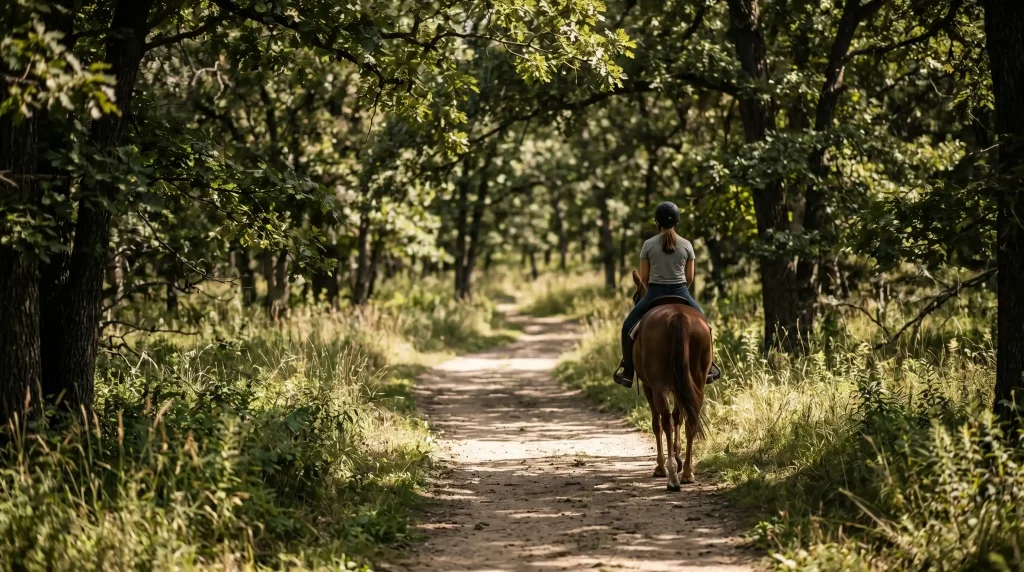
The village enforces large-lot zoning — minimum two acres in the DuPage portion, four acres in much of the Kane portion — which keeps Wayne looking and feeling like a true country village rather than a suburb. Miles of equestrian trails wind through the community, connecting to more than 3,500 acres of surrounding forest preserves. Dunham Castle, the Dunham Woods Riding Club, and the historic village center are all listed on the National Register of Historic Places, and the Wayne-DuPage Hunt — one of only two active fox hunt groups in the Chicago region — still operates here, continuing traditions that go back nearly a century.
For all its rural character, Wayne is remarkably well-positioned. Commuters use Metra stations in nearby Geneva, Bartlett, or West Chicago, all within a short drive. Route 59 connects to I-88 and I-90 for regional access. Families rely on two highly regarded school districts — St. Charles District 303 serves the south and west portions, and Elgin School District U-46 serves the central, north, and east portions, with Wayne Elementary located within the village. It’s a community where you can keep horses on your property, take the train into Chicago for work, and still be home before dark to ride your own trails.
One of the only Chicago-area villages with genuine horse-keeping zoning, private riding trails, boarding stables, and the historic Wayne-DuPage Hunt
Three National Register of Historic Places districts, including Dunham Castle and the Dunham Woods Riding Club — true architectural and cultural heritage
Surrounded by Pratt’s Wayne Woods and other preserves with dedicated equestrian trails, hiking paths, and protected oak savanna landscape
Served by two of Illinois’s respected districts, with Wayne Elementary located within village limits and St. Charles North High School nearby
Wayne’s real estate market is genuinely distinct from anything else in the northwest suburbs — and that’s by design. The village’s two-to-four-acre minimum lot zoning has kept inventory small, preserved the rural aesthetic, and built a market where properties are bought by buyers who want something specific: space, privacy, historic character, and often horses. This is not a market for buyers looking for typical subdivision living; it’s a market for buyers who’ve been waiting for a very particular kind of home.
The housing stock reflects that identity. You’ll find true country estates on multi-acre parcels, New England-style homes built since the 1970s, late 19th-century farmhouses with original character preserved, and a smaller number of well-appointed subdivisions where every home shares a similar scale and feel. Prices range widely — from approachable bungalows on smaller parcels to multimillion-dollar estates with barns, paddocks, and full equestrian facilities — giving the market more accessibility than its reputation suggests.
Wayne is often compared to Barrington Hills and Mettawa, and fairly so — these are the region’s three most authentic equestrian villages. But Wayne remains the most accessible from the Tri-Cities corridor, with genuine connections to St. Charles, Geneva, and Bartlett for shopping, dining, and daily life. For buyers who want rural privacy without the longer drive to Lake County, Wayne is often the answer they didn’t know existed.
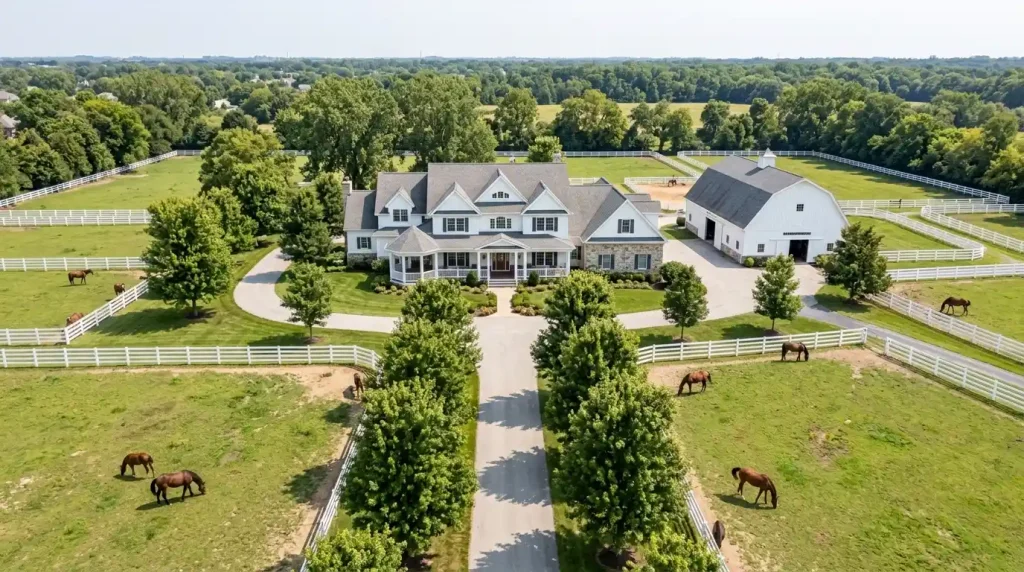
A high-end residential estate in Wayne
Wayne’s defining housing type — multi-acre parcels with barns, paddocks, fencing, and direct access to the village’s equestrian trail network. Horse-friendly zoning and the village’s working-equestrian culture make this the premier destination for horse owners in the western suburbs.
Custom homes and historic residences on wooded parcels throughout the village — including New England-style architecture, 19th-century farmhouses, and estates dating back to the Dunham era. Character, privacy, and genuine land, all within minutes of St. Charles and Geneva.
Well-planned subdivisions built since the 1970s with consistent scale, mature landscaping, and the one-to-three-acre lots that define Wayne’s residential character. A strong fit for buyers who want Wayne’s lifestyle without a full working-estate commitment.
Current Listings in Wayne
The questions we hear most often from buyers and sellers considering a move to this community.
Wayne is best known as one of the Chicago area’s few genuine equestrian villages — a rural, historic community built around horse breeding, country estates, and large-lot living. The village is home to Dunham Castle and the Dunham Woods Riding Club (both on the National Register of Historic Places), and it still hosts the Wayne-DuPage Hunt, one of only two active fox hunt groups in metropolitan Chicago. Wayne has intentionally preserved its rural character through strict large-lot zoning and a strong tradition of community stewardship.
Wayne is approximately 33 miles west of downtown Chicago. The village doesn’t have its own Metra station, but residents use nearby stations in Geneva, Bartlett, or West Chicago on the Union Pacific West or Milwaukee District West lines, all within a short drive. By car, I-88 and I-90 are both accessible via Route 59, with typical drive times to the city of 50–70 minutes depending on traffic and route.
Wayne is split between two school districts based on address. The south and west portions of the village are served by St. Charles Community Unit School District 303, one of Illinois’s consistently top-rated districts. The central, north, and east portions fall within Elgin Area School District U-46, the second-largest district in Illinois. Wayne Elementary School, located within the village itself, is part of U-46 and serves grades K–6. Because school boundaries run through the village, confirming the district for any specific property is always worth doing early in the search.
Yes — Wayne is specifically zoned to support horse-keeping, which is part of what makes the village unique. In the DuPage County portion of Wayne, a minimum of two acres is required to keep horses. In the Kane County portion, properties outside of established subdivisions generally require at least four acres. Village code allows one horse per acre on qualifying lots, and outbuildings like stables are permitted under village rules. Miles of equestrian trails run through the community and connect to surrounding forest preserves, giving horse owners a genuinely usable trail network from their own property.
Wayne rewards buyers who know what they’re looking for. It’s a specialized market — smaller inventory, distinctive zoning, and a buyer pool focused on rural privacy, historic character, or equestrian lifestyle. For those buyers, Wayne is one of the most compelling options anywhere in the Chicago area because genuine alternatives simply don’t exist at this scale within 35 miles of the city. Values here are supported by scarcity and by the village’s long commitment to preserving its character. When the right property comes up, serious buyers act quickly.
All three communities offer something similar on the surface — acreage, privacy, horse-friendly zoning — but they’re genuinely different in character. Barrington Hills is larger, older-money, and commands the highest prices of the three, with the longest tradition as a Chicago-area equestrian community. Campton Hills is larger and newer as an incorporated village, more accessible in price, and more integrated with the St. Charles/Geneva corridor. Wayne sits between them — smaller and more intentionally preserved than Campton Hills, more approachable in price than Barrington Hills, and arguably the most authentic historic equestrian village of the three. We’re happy to walk you through all three if you’re weighing your options.
Whether you’re just starting to explore Wayne or you’re ready to write an offer on the equestrian estate you’ve had in mind for years, we’re here to help. Wayne is a specialized market — zoning, school boundaries, and horse-keeping rules all vary parcel by parcel — and we know how to navigate it with you.
Browse what’s currently available, get a sense of what your Wayne property is worth, or simply reach out with a question. There’s no obligation — just a real conversation with someone who genuinely knows this village.

Copyright © 2026 Spinnato & Associates – Website designed and developed by